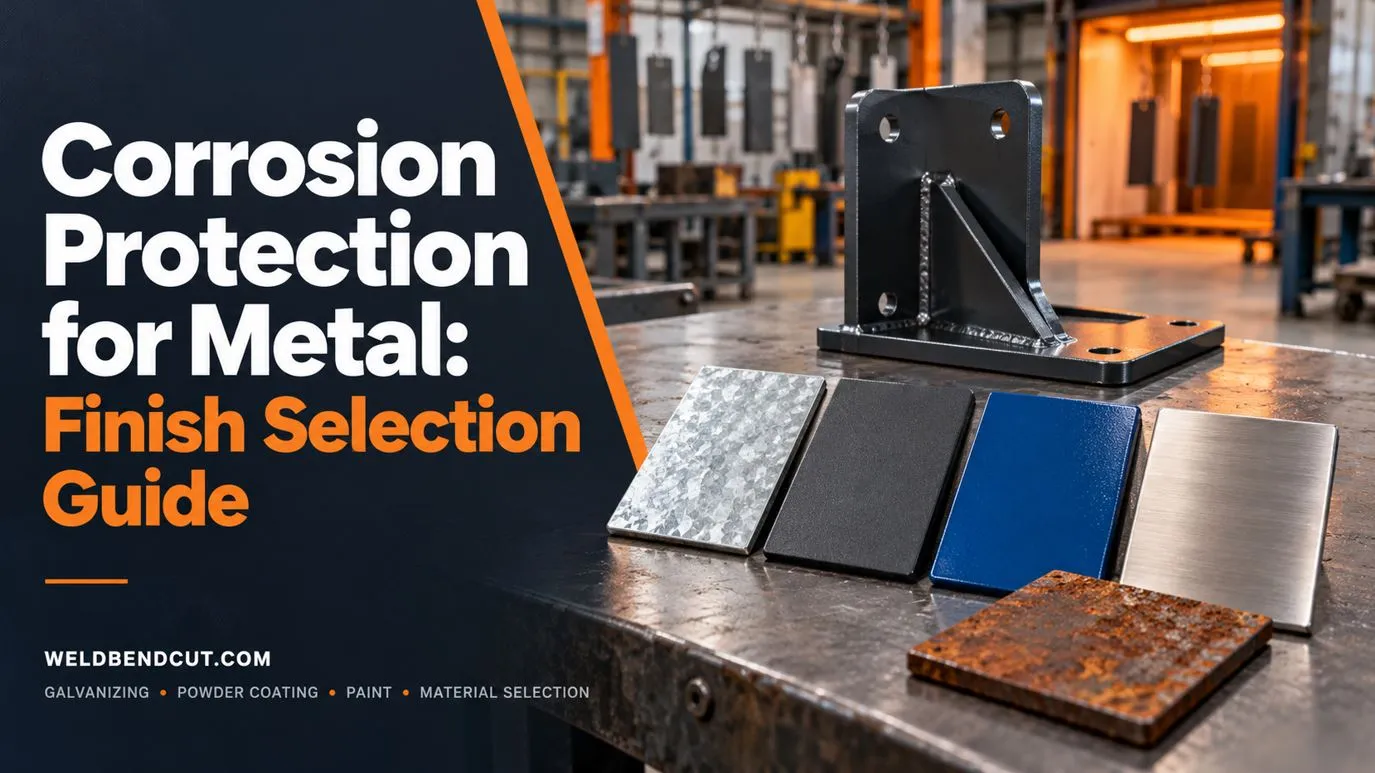
The finish on a fabricated product is more than colour. It protects the base metal, influences service life and affects how parts must be cut, welded, assembled and maintained. A coating chosen at the end of a project may fail because the design already contains sharp edges, sealed cavities or water traps.
Effective corrosion protection begins during design. The correct system depends on the metal, exposure, geometry, appearance, budget and repair strategy.
Understand Why Metal Corrodes
Corrosion is an electrochemical process. For common steels, moisture and oxygen contribute to rust formation. Salts, industrial pollutants, heat and chemical exposure can accelerate attack. Crevices and deposits retain moisture, creating local conditions more severe than the surrounding environment.
Different metals behave differently. Stainless steel relies on a thin passive oxide film. Aluminium develops a protective oxide layer but can suffer pitting or galvanic attack. Zinc protects steel through both barrier and sacrificial action.
Because mechanisms vary, there is no single finish that is best for every product.
Classify the Environment
Define where and how the item will be used:
- dry indoor workshop;
- humid interior;
- exposed rural or urban exterior;
- coastal atmosphere;
- industrial pollution;
- immersion or splash zone;
- food or chemical contact;
- high temperature; or
- underground service.
Also consider cleaning chemicals, abrasion, ultraviolet exposure, condensation and expected maintenance. An indoor equipment stand and a seafront handrail should not share the same finish specification simply because both are made from steel.
Where a project uses a recognized corrosion category or coating standard, state it clearly and use compatible preparation, application and inspection requirements.
Design Out Corrosion Traps
Finish performance depends heavily on geometry. Improve durability by:
- sloping horizontal surfaces;
- providing drainage at true low points;
- avoiding narrow crevices;
- sealing or venting hollow sections appropriately;
- using smooth, accessible welds;
- rounding sharp edges;
- separating dissimilar metals;
- avoiding absorbent materials against metal; and
- making inspection and cleaning possible.
Coatings become thin on sharp corners, so edge rounding improves coverage. Intermittent welds on overlapping outdoor plates may create uncoated crevices; joint design and sealing need deliberate treatment.
Surface Preparation Is Fundamental
A premium coating applied to oil, rust, mill scale or welding residue will not perform as intended. Preparation may include:
- degreasing;
- solvent or alkaline cleaning;
- abrasive blasting;
- mechanical cleaning;
- pickling;
- conversion coating;
- removal of spatter and sharp edges; and
- dust removal.
The required cleanliness and surface profile depend on the coating system. Follow the coating manufacturer’s data and applicable standards.
Avoid touching prepared surfaces with contaminated gloves. Control the time between preparation and coating so flash rust or new contamination does not develop.
Paint Systems
Liquid paint systems can combine primers, intermediate coats and topcoats. They offer broad colour choice and can be applied to large structures or repaired on site.
A complete specification should state:
- surface preparation;
- primer type;
- intermediate and topcoat products;
- dry film thickness;
- colour and gloss;
- curing conditions; and
- inspection method.
“Paint black” is not a corrosion specification. Product compatibility matters: a strong topcoat cannot compensate for an unsuitable primer or poor preparation.
Paint is often practical for fabricated steel, but edges, welds, hidden cavities and damaged areas need particular attention.
Powder Coating
Powder coating applies electrically charged powder and cures it into a continuous film. It can create a durable, attractive finish with consistent colour and low solvent emissions.
Design considerations include:
- oven size and curing temperature;
- drain and hanging points;
- threaded-hole masking;
- electrical contact points;
- Faraday-cage effects in deep recesses;
- coating thickness at fits;
- trapped air or outgassing; and
- corrosion protection beneath scratches.
Powder coating is not automatically an outdoor corrosion system. Substrate preparation and pretreatment remain critical. For severe exposure, a suitable zinc-rich primer, galvanizing or other base protection may be required.
Assemble heat-sensitive seals, plastics and timber after curing unless their ratings allow the process.
Hot-Dip Galvanizing
In hot-dip galvanizing, fabricated steel is immersed in molten zinc, forming zinc-iron alloy layers and an outer zinc layer. It coats many external and internal surfaces and provides sacrificial protection to steel.
The American Galvanizers Association explains that galvanized protection combines barrier action, cathodic protection and development of a zinc patina.
Design must account for:
- venting and drainage;
- safe immersion of hollow sections;
- zinc flow through the assembly;
- overlapping surfaces;
- distortion of thin or asymmetrical fabrications;
- threaded and precision-fit areas;
- coating appearance; and
- material chemistry.
Consult the galvanizer before releasing complex products. Never submit sealed hollow fabrications; trapped air and moisture can create severe hazards during immersion.
Duplex Systems
A duplex system combines galvanizing with paint or powder coating. The zinc protects the steel while the topcoat adds colour and another barrier.
Successful duplex coating requires preparation compatible with fresh or weathered galvanizing. Communicate between fabricator, galvanizer and coater so surfaces are not treated in a way that prevents adhesion.
Duplex systems can extend maintenance intervals in demanding environments, but they cost more initially and need a controlled specification.
Electroplating and Mechanical Finishes
Zinc plating, nickel plating, chrome systems and other electrodeposited finishes are used for hardware, small components and decorative parts. Coverage, hydrogen embrittlement risk, thickness and post-treatment depend on the material and process.
High-strength fasteners or components require specialist review because some cleaning and plating processes can introduce hydrogen. Do not specify a decorative finish without considering mechanical properties and service exposure.
Brushing, polishing and blasting change appearance but may not provide sufficient corrosion protection by themselves. A polished carbon-steel surface will still rust without a protective system.
Stainless Steel Finishing and Passivation
Stainless steel depends on a chromium-rich passive surface. Fabrication can leave heat tint, free iron contamination and embedded particles that reduce corrosion performance.
Good practice includes:
- dedicated stainless tools and abrasives;
- removal of welding heat tint where service requires it;
- cleaning after fabrication;
- pickling or passivation to an approved procedure; and
- restoration of the specified directional finish.
Passivation is a chemical treatment, not a way to hide poor welds. Hygienic, pharmaceutical or marine applications may require specific surface roughness and documented treatment.
Aluminium Finishes
Aluminium is often used bare, anodized or powder coated. Anodizing thickens the natural oxide layer and can improve appearance and resistance to wear or corrosion. Alloy, temper, welding and surface condition affect the final result.
Powder-coated aluminium needs appropriate pretreatment. Edges, scratches and contact with dissimilar metals remain important. Avoid alkaline or chemical cleaners that are unsuitable for the chosen finish.
If welded areas will be visible after anodizing, prototype the appearance. Weld metal and parent alloy may colour differently.
Control Galvanic Corrosion
When different metals are electrically connected in an electrolyte such as rainwater, the less noble material may corrode faster. Risk depends on the metal pair, exposed area ratio, environment and joint design.
Controls can include:
- selecting compatible materials;
- electrically isolating contacts;
- sealing out moisture;
- coating both materials appropriately;
- using compatible fasteners; and
- designing for drainage.
A small carbon-steel fastener connected to a large stainless surface can be particularly vulnerable. Seek materials guidance for critical applications.
Specify Finish in Measurable Terms
The drawing or purchase order should define:
- base material;
- preparation standard;
- coating product or system;
- colour standard;
- gloss or texture;
- required thickness;
- masked areas;
- appearance acceptance;
- corrosion test or rating where relevant;
- repair method; and
- documentation.
Samples or finish panels can align expectations for visible products. Colour names such as “silver” or “industrial grey” are too subjective without a recognized reference.
Inspect the Finished Product
Inspection may include:
- visual coverage;
- runs, pinholes or inclusions;
- dry film thickness;
- adhesion testing;
- holiday detection;
- colour and gloss;
- thread and fit clearance; and
- coating certificates.
The method must suit the coating and specification. Record nonconformities and use an approved repair system rather than applying unrelated spray paint.
Finish-Selection Checklist
Before release, confirm that:
- the service environment is defined;
- material and finish are compatible;
- water traps and crevices are minimized;
- preparation is specified;
- welds and edges are finish-ready;
- hollow parts have safe venting or sealing;
- coating thickness will not block fits;
- heat-sensitive parts are sequenced correctly;
- galvanic contacts are controlled;
- colour and appearance are measurable;
- inspection requirements are stated; and
- future repair is practical.
Final Thoughts
Corrosion protection is most effective when it is designed into the product. Drainage, accessible joints, rounded edges and compatible materials give any coating a better chance to succeed.
Choose the system from the environment and required service life, then coordinate fabrication, preparation, application and inspection. A clear finish specification protects both the product and the expectations of everyone involved.
 No products in the cart.