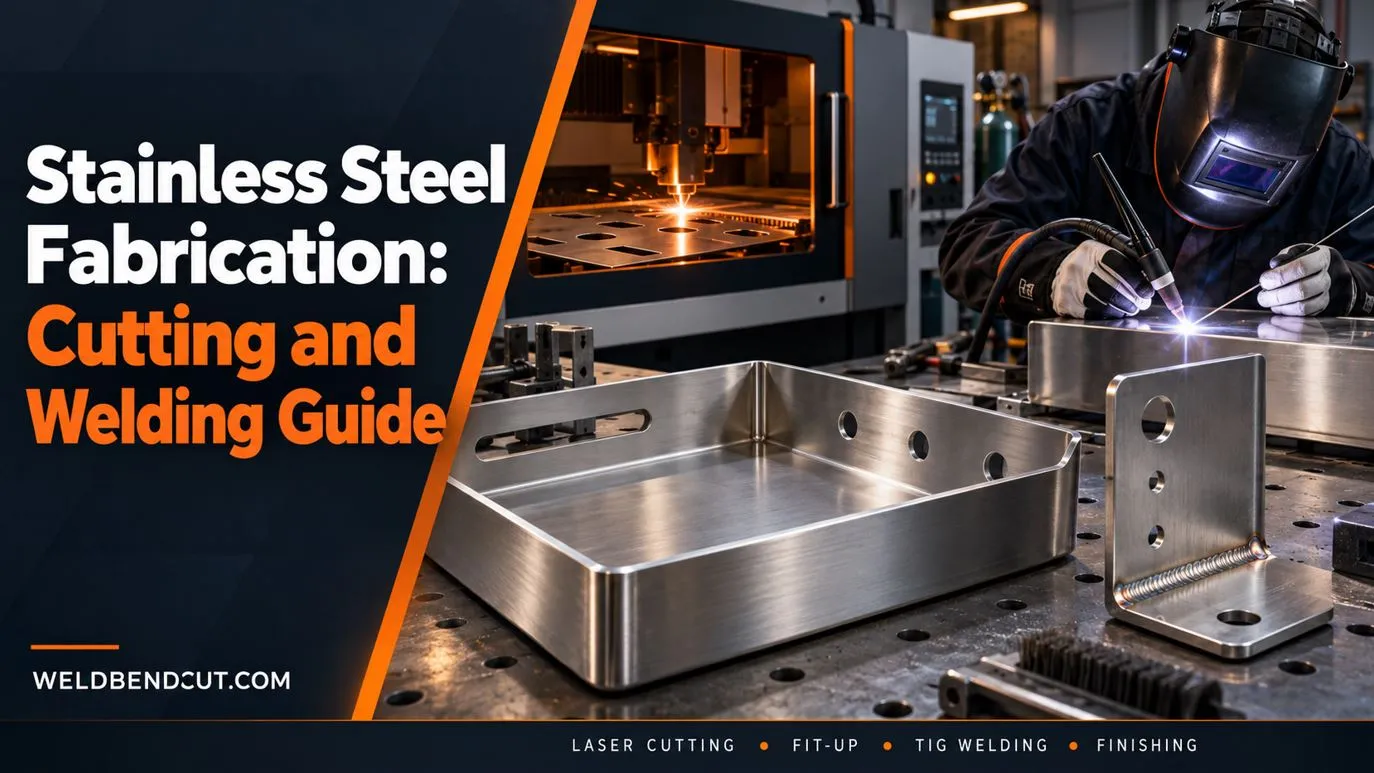
Stainless steel is selected for corrosion resistance, hygiene, heat resistance or appearance. Those benefits depend on the alloy and its surface condition. Fabrication can reduce performance when carbon-steel contamination, excessive heat, poor joint design or unsuitable finishing methods are allowed into the process.
Successful stainless fabrication treats the material as a controlled system from delivery through final cleaning. The following principles apply broadly, but grades, welding procedures and acceptance criteria must match the specific project.
Identify the Grade and Service
“Stainless steel” describes a large family of alloys. Austenitic grades such as 304 and 316 are common, but ferritic, martensitic, duplex and precipitation-hardening grades behave differently.
Before production, confirm:
- exact grade and product form;
- thickness;
- surface finish;
- service temperature;
- corrosion exposure;
- structural or pressure requirements;
- hygiene requirements; and
- traceability or certification.
Do not substitute grades based only on similar appearance. Chloride exposure, strength, weldability and post-weld treatment can make the material specification critical.
Protect Material During Storage
Keep stainless sheet and tube separated from carbon steel. Rust particles from grinding dust, wire brushes, racks or forklift tines can embed in the surface and later appear as staining.
Use:
- clean, dry storage;
- protected supports;
- dedicated or covered handling equipment;
- clear grade labels;
- gloves free from oil and steel particles; and
- protective film where appropriate.
Do not drag polished sheets across rough racks. Inspect protective film before cutting; damaged film can hide scratches or trap contamination.
Use Dedicated Tools
Mark grinders, wire brushes, files and abrasives for stainless-only use. A wheel previously used on carbon steel can transfer free iron even when it looks clean.
Keep the stainless work area away from heavy carbon-steel grinding. Airborne particles can settle on completed products. Dedicated benches or protective covers are valuable for appearance-critical work.
Use cutting fluids and cleaners known to be compatible with stainless and the final service.
Plan Cutting for Edge Quality
Stainless sheet can be laser cut, waterjet cut, plasma cut, sawn or mechanically sheared. The best process depends on thickness, tolerance, heat input and required finish.
Consider:
- heat-affected zone;
- dross and oxide;
- edge taper;
- burr;
- protective-film compatibility;
- nitrogen or other assist gas requirements;
- contamination from tooling; and
- post-cut cleaning.
Heat tint or oxide at a thermally cut edge may need removal before welding or exposure. Waterjet avoids a thermal heat-affected zone but may be slower or more costly for certain parts.
Deburr edges with dedicated tools and maintain the specified grain direction for visible components.
Design for Forming
Stainless generally has greater springback and work-hardening behaviour than mild steel. Bend data must reflect grade, thickness, rolling direction, radius and tooling.
Practical controls include:
- using validated bend allowances;
- allowing for springback;
- selecting adequate inside radius;
- checking press-brake tonnage;
- protecting visible surfaces from tool marks;
- keeping cut features away from bend zones; and
- planning the bend sequence for collision-free handling.
Tight radii or repeated forming can promote cracking in some grades and directions. Trial unfamiliar combinations before committing a full batch.
Prepare Joints Carefully
Remove oil, adhesive, marker residue, moisture and oxide from the weld zone. Use a suitable cleaner and lint-free material. Do not use chlorinated solvents near arc welding; hazardous decomposition products can form.
Joint fit-up should be consistent. Large gaps increase filler volume and heat input. Misalignment can create crevices or make hygienic finishing difficult.
Choose edge preparation, root opening and backing in accordance with the qualified welding procedure. For tube and pipe, internal purge quality may be essential to prevent heavy oxidation on the root.
Choose the Welding Process
TIG welding is widely used for thin material, visible joints and applications requiring precise control. MIG can offer higher deposition rates for production work. Other processes are used depending on thickness, access, quality and code.
Selection should consider:
- base alloy;
- joint type;
- thickness;
- position;
- appearance;
- productivity;
- required penetration; and
- procedure qualification.
Miller’s TIG welding guide provides a useful process overview. Actual settings, filler and shielding arrangements must follow the material and procedure.
Select Filler Metal and Shielding Correctly
Filler metal must be compatible with the base grade and service conditions. The familiar filler used for one austenitic grade may be unsuitable for a duplex, high-temperature or dissimilar-metal joint.
Shielding gas protects the molten weld and surrounding hot metal. Poor coverage can cause oxidation, porosity and contamination. Check:
- gas type and purity;
- flow rate;
- leaks;
- torch angle;
- nozzle size;
- drafts;
- post-flow time; and
- backing or purge gas.
Excessive gas flow can create turbulence and draw air into the shield. More flow is not always better.
Control Heat Input and Distortion
Stainless sheet expands significantly when heated and has relatively low thermal conductivity. It can distort readily and retain heat near the weld.
Control heat by:
- using correct joint fit-up;
- minimizing unnecessary weld metal;
- tacking at suitable intervals;
- balancing the weld sequence;
- using fixtures and chill bars where approved;
- welding short planned sections;
- controlling interpass temperature; and
- allowing cooling without contamination.
Do not quench a critical weld unless the approved procedure permits it. Monitor heat input and interpass limits when metallurgical performance matters.
Prevent Common Weld Problems
Common stainless fabrication problems include:
- porosity from contamination or poor shielding;
- lack of fusion from incorrect technique or parameters;
- sugaring or heavy root oxidation from poor purge;
- distortion from excessive heat;
- undercut;
- cracking in unsuitable grade or filler combinations; and
- corrosion at heat-tinted or contaminated surfaces.
Food and hygienic service adds requirements for smooth transitions, full cleaning and freedom from crevices. Miller’s discussion of food-grade stainless weld defects highlights the relationship between technique, shielding and sanitation, while project acceptance must follow the governing specification.
Finish Without Damaging the Surface
Define the required finish before fabrication. A mill finish, brushed finish, polished finish and sanitary finish require different labour and inspection.
When blending welds:
- use dedicated abrasives;
- avoid removing excessive parent metal;
- progress through suitable grit stages;
- follow the original grain direction;
- prevent deep scratches; and
- maintain corner geometry.
Grinding a weld flat does not guarantee acceptable corrosion performance. It may expose inclusions or leave embedded abrasive. Clean the surface after mechanical finishing.
Remove Heat Tint and Restore the Surface
Welding heat tint indicates oxide formation and a chromium-depleted region beneath the oxide. Depending on service and specification, it may need mechanical removal, pickling, electrochemical cleaning or another approved method.
Passivation treatments help remove free iron contamination and support formation of the passive surface. Pickling and passivation are different processes and use hazardous chemicals; trained personnel, suitable equipment and waste controls are essential.
Follow the material, chemical supplier and project standard. Never improvise acid treatment in an uncontrolled workshop area.
Handle Dissimilar-Metal Joints Carefully
Joining stainless to carbon steel introduces filler-selection, dilution, thermal and corrosion questions. The joint may need a special filler, isolation from moisture or a coating transition.
Carbon steel must not contaminate stainless surfaces during preparation. If the final assembly is exposed outdoors, consider the galvanic relationship and area ratio.
Seek welding-engineering guidance for critical dissimilar joints.
Inspect at Each Stage
Do not wait until the final polish to inspect. Check:
- grade and certificates on receipt;
- scratches and film damage;
- cut edge quality;
- bend dimensions;
- joint cleanliness and fit-up;
- purge and shielding condition;
- weld profile and colour;
- distortion;
- finish direction; and
- final cleanliness.
Use non-destructive testing required by the drawing or code. Confirm that any penetrant, cleaner or marking product is suitable for stainless and its service.
Stainless Fabrication Checklist
Before release, confirm that:
- grade, finish and service are defined;
- material is separated from carbon steel;
- tools and abrasives are dedicated;
- cutting and forming data match the alloy;
- joint surfaces are clean;
- filler and shielding follow the procedure;
- purge arrangements are verified where required;
- heat input and distortion are controlled;
- welds meet profile and quality requirements;
- heat tint is treated as specified;
- the surface finish is restored consistently; and
- final inspection and traceability are complete.
Final Thoughts
Stainless steel retains its value when fabrication preserves both geometry and surface integrity. Contamination control, consistent fit-up, correct shielding and controlled heat are as important as the visible weld bead.
Define the grade and finish first, protect the material through every operation and use qualified procedures for critical work. The result is not just a clean-looking product, but a fabrication capable of delivering the corrosion resistance and service performance the material was chosen for.
 No products in the cart.