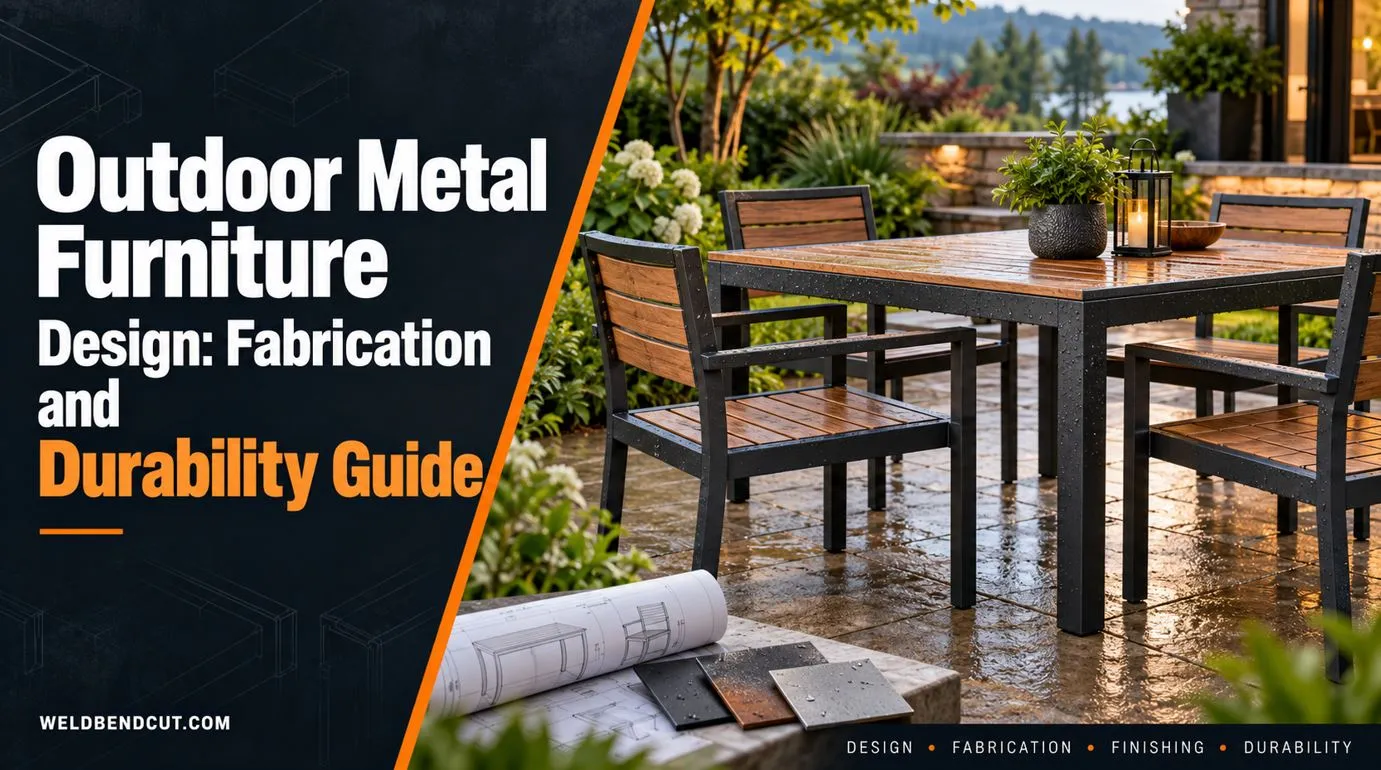
Outdoor metal furniture must carry people or equipment while enduring rain, sunlight, dirt, temperature changes and repeated use. A frame that appears strong in a rendering can still fail early if it traps water, uses incompatible materials or cannot be coated properly.
Good design brings structure, comfort, fabrication and weather protection together. Whether the product is a table, bench, rack, planter stand or drinks station, the following principles help create furniture that is practical to build and durable in service.
Define Use and Environment
Start with the real operating conditions:
- private residential or public use;
- fixed or movable installation;
- expected loads;
- coastal, industrial or mild environment;
- exposure to rain and direct sunlight;
- contact with soil, pool chemicals or food;
- cleaning method; and
- required service life.
Public or commercial furniture may be subject to specific safety, accessibility or load standards. Structural and safety-critical designs should be verified by qualified professionals rather than based on appearance or a generic online plan.
Select the Frame Material
Mild steel tube is common because it is strong, economical and easy to fabricate. It requires an appropriate protective finish. Stainless steel offers strong corrosion resistance in many environments but costs more and needs controlled fabrication. Aluminium reduces weight and resists corrosion naturally in many conditions, yet it has different stiffness, welding and surface-finish requirements.
Choose the grade, profile and wall thickness based on span, load, impact, joint design and environment. Avoid selecting material solely because it is available in the shop.
Thin-wall tube can create elegant furniture, but it is more sensitive to denting, weld burn-through and distortion. Large members may look robust while adding unnecessary weight and shipping cost.
Design a Clear Load Path
Loads should travel from the seat, shelf or tabletop through supports to the ground without relying on weak decorative details.
Review:
- vertical load;
- side load and racking;
- overturning;
- concentrated loads;
- repeated or fatigue loading;
- people sitting on edges; and
- movement during transport.
Cross-bracing, gussets, broad corner joints and formed panels can increase stiffness. A rectangular table frame with no diagonal resistance may rack even when every weld is strong.
Do not use weld size as a substitute for poor geometry. A stiff, direct load path usually performs better than adding excessive weld metal to a flexible layout.
Use Comfortable and Safe Proportions
Furniture dimensions must fit people and intended objects. Confirm seat height, depth, back angle, table clearance and reach using relevant ergonomic guidance or physical mockups.
Round or soften exposed corners. Remove sharp burrs and avoid projections that catch clothing. Keep finger traps away from hinges and moving parts. Openings accessible to children need special attention.
Stability matters. A narrow base, heavy top or large overhang can cause tipping. Check the centre of gravity under realistic use, including a person leaning on an edge.
Prevent Water Traps
Water retained inside or against metal is a major cause of corrosion. Design horizontal surfaces with drainage and avoid open tube ends facing upward.
Useful details include:
- capped or sealed tube ends;
- drain holes at genuine low points;
- sloped shelves and ledges;
- gaps beneath timber slats;
- raised feet;
- continuous coating access; and
- avoidance of tight unsealed crevices.
A drain hole located above the true low point will leave standing water. Consider the furniture’s final installed orientation, including uneven ground.
If hollow components will be hot-dip galvanized, venting and drainage must follow galvanizer requirements. Consult the supplier before finalizing sealed sections.
Integrate Wood Correctly
Wood adds warmth and comfort, but it moves as moisture changes. Do not clamp a wide timber panel rigidly at every point. Depending on the construction, slotted holes or suitable tabletop fasteners can permit movement across the grain.
Provide airflow and drainage beneath timber. Avoid pockets that retain wet debris against the wood or steel. Seal end grain and specify a finish suitable for outdoor exposure.
Keep metal fasteners compatible with the frame and timber treatment. Some treated woods can accelerate corrosion of unsuitable hardware. Use the fastener and barrier system recommended for the chosen materials.
Make boards replaceable. A bolted slat is easier to maintain than timber permanently trapped by welded tabs.
Plan Fasteners and Dissimilar Metals
Outdoor fasteners must resist the environment and remain serviceable. Consider stainless or suitably coated hardware, but check galvanic compatibility with the base metal.
When dissimilar metals contact in the presence of moisture, galvanic corrosion can occur. Isolating washers, coatings or sealants may be required. The risk depends on material combination, area ratio and environment.
Avoid exposed nuts where they create snag points. Use locknuts, thread-locking methods or mechanical retention appropriate to vibration and maintenance requirements.
Design Joints for Fabrication
Choose joints that are strong, accessible and easy to reproduce. Mitred tube corners can create a clean appearance but require accurate cutting and fit-up. Butt joints are simpler but may expose tube ends or need caps. Tabs and slots can locate brackets and panels.
Provide access for the welding torch and inspection. A joint hidden between closely spaced members may be difficult to weld even though it is visible in CAD.
Avoid unnecessary continuous welds on thin frames. They add heat and distortion. Weld length and size must follow the design requirements, but decorative sealing and structural attachment are separate decisions.
Control Welding Distortion
Long, slender furniture frames can twist during welding. Use a flat reference surface, fixtures and a balanced sequence.
Practical controls include:
- verifying cut lengths and mitres;
- clamping to stable datums;
- checking diagonal dimensions;
- tacking the full frame before final welding;
- alternating opposite joints;
- minimizing unnecessary heat input; and
- allowing controlled cooling.
Check the frame again before adding tops or shelves. A flexible component can disguise a twisted base until it is installed on a flat floor.
Choose a Corrosion-Protection System
The finish must match the substrate, environment and expected maintenance.
Options include:
- primer and paint;
- powder coating;
- hot-dip galvanizing;
- duplex systems combining galvanizing and coating;
- passivated stainless steel;
- anodized or coated aluminium; and
- weathering steel in suitable detailing and environments.
Surface preparation is fundamental. Oil, mill scale, rust and welding residue interfere with coatings. Grind sharp edges to a profile the coating can cover effectively.
Powder coating offers colour and a durable finish, but scratches can expose steel. Galvanizing provides sacrificial protection, while the final appearance and venting requirements must be considered. The American Galvanizers Association describes the barrier, cathodic and zinc-patina protection mechanisms.
Provide Stable Ground Contact
Outdoor surfaces are rarely perfectly level. Adjustable feet can prevent rocking, but they must resist corrosion and support the load. Fixed skids or broad feet reduce sinking on softer surfaces.
Avoid creating cups that collect water. If the product is anchored, specify hole locations, fasteners and substrate assumptions. Do not leave critical anchorage design to installers without information.
For movable products, protect floors and make lifting points comfortable. Consider total weight and whether two people can carry the item safely.
Design for Production and Shipping
A beautiful welded frame may be expensive to transport because it occupies a large volume. Flat-pack or knock-down construction can reduce shipping cost, but it adds hardware and assembly requirements.
Compare:
- fully welded rigidity;
- modular packaging;
- customer assembly skill;
- visible fasteners;
- replacement parts; and
- production quantity.
Repeat products benefit from fixtures, standardized tube lengths and common hardware. Arrange laser-cut brackets efficiently on sheet and use the same bend tools across part families where possible.
Prepare Clear Fabrication Files
A complete digital package should include:
- overall assembly drawing;
- dimensions and tolerances;
- material grades and profiles;
- tube cut list;
- plate and sheet DXFs;
- bend drawings;
- weld symbols;
- hardware BOM;
- wood dimensions and species assumptions;
- finish specification;
- drainage details; and
- exploded assembly view.
If the product is sold as a downloadable plan, state what is and is not included. Digital files are manufacturing information, not a guarantee of local code compliance or structural suitability.
Prototype and Test Realistically
Build a prototype from the intended materials and inspect it on a flat surface. Check:
- rocking and racking;
- deflection under intended load;
- edge safety;
- comfort;
- water drainage;
- door, lid or removable-component operation;
- fastener access;
- coating clearances; and
- wood movement allowances.
Use appropriate formal testing when standards, public safety or commercial specifications apply.
Outdoor Furniture Checklist
Before release, confirm that:
- loads and environment are defined;
- the frame has a clear, stable load path;
- proportions are safe and comfortable;
- exposed edges are smooth;
- hollow sections drain or are properly sealed;
- wood can move, drain and be replaced;
- fasteners resist corrosion;
- dissimilar metals are managed;
- welds are accessible;
- distortion control is planned;
- the finish matches the environment;
- feet work on the intended surface;
- shipping and assembly are practical; and
- production files share one revision.
Final Thoughts
Durable outdoor furniture is designed from the weather inward. Strength is essential, but drainage, coatings, replaceable timber, compatible hardware and maintainability often determine how long the product remains attractive and useful.
Develop the load path first, remove water traps and design joints around the real fabrication process. Then prototype the complete product—including its finish and wood components—before releasing it for repeat production.
 No products in the cart.