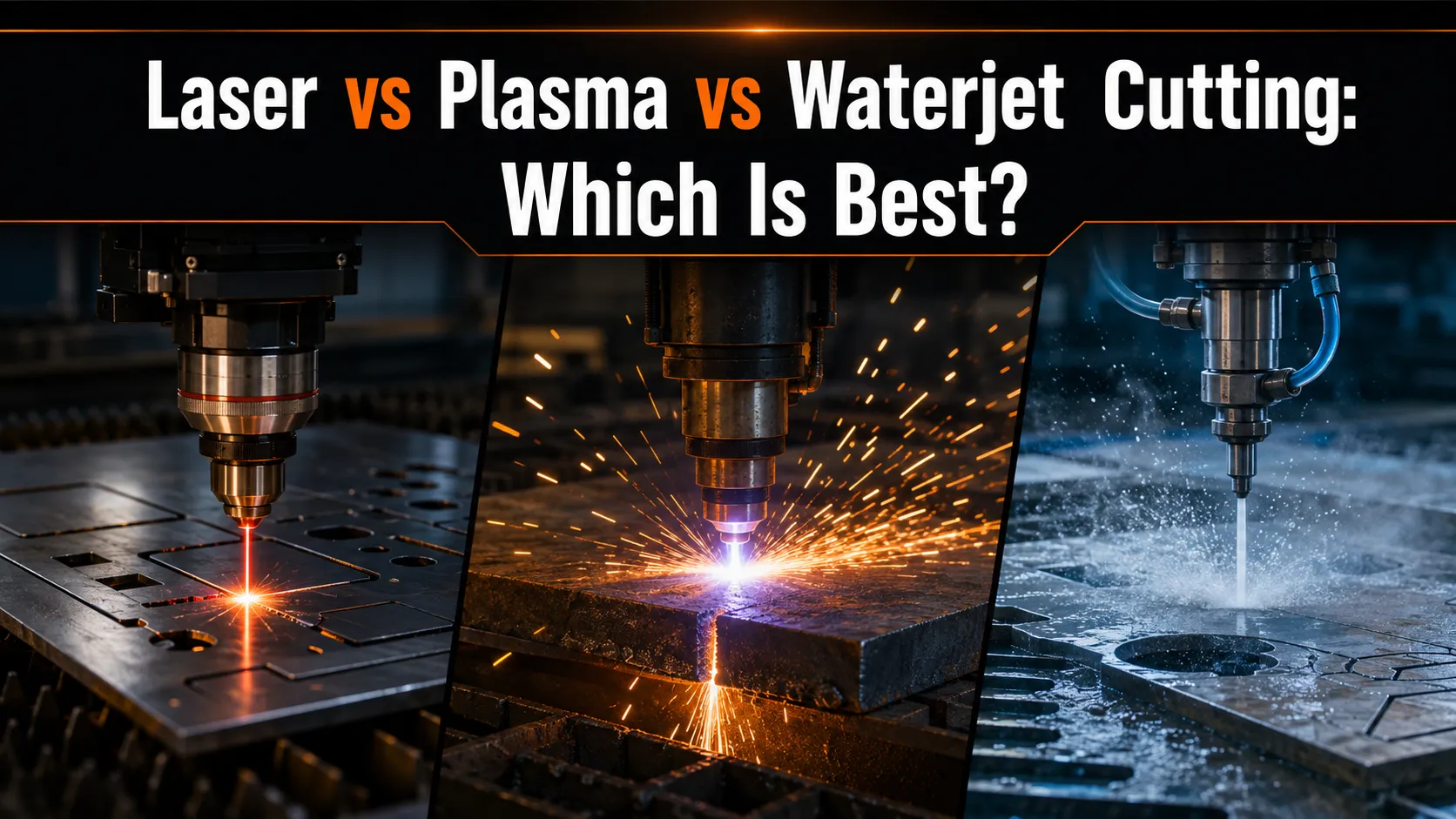
Laser, plasma and waterjet machines can all turn a digital profile into a cut component, but they do not produce identical results. Each technology has a different working principle, material range, speed, kerf, heat effect and cost structure.
The best process is not simply the newest machine or the one with the tightest advertised tolerance. It is the process that meets the part requirement with the lowest total production cost. This guide compares the three methods from a practical fabrication perspective.
Start With the Part Requirements
Before requesting a quotation, define:
- material type and grade;
- thickness;
- part size and quantity;
- smallest holes and narrowest slots;
- dimensional tolerances;
- edge-quality requirement;
- whether the edge will be welded, bent or machined;
- surface-finish sensitivity;
- allowable heat-affected zone; and
- delivery and budget priorities.
A decorative stainless panel, a thick structural gusset and a heat-sensitive aluminium aerospace part may each favor a different technology.
How Laser Cutting Works
Laser cutting focuses a high-energy beam onto the material. The beam melts or vaporizes a narrow path while assist gas removes material from the kerf. Modern fiber lasers are widely used for sheet and plate metals.
Laser advantages
- narrow kerf;
- high precision on thin material;
- excellent small-feature capability;
- high speed on suitable sheet thicknesses;
- clean, repeatable CNC production;
- marking or engraving capability on many systems; and
- efficient automation and nesting.
Laser limitations
- higher capital and specialist-maintenance cost;
- performance changes with thickness and material reflectivity;
- thermal heat-affected zone remains present;
- dirty, rusty or coated material may reduce consistency;
- thick plate may cut more slowly or require powerful equipment; and
- part cost can rise when very tight tolerance is specified unnecessarily.
Laser is often the first choice for precise sheet-metal components, small holes, detailed patterns, cabinets, brackets and production parts requiring minimal cleanup.
How Plasma Cutting Works
Plasma cutting uses a high-velocity jet of ionized gas and an electrical arc to melt and eject electrically conductive material. It cuts carbon steel, stainless steel, aluminium and other conductive metals.
Plasma advantages
- fast cutting on medium and thick conductive metal;
- lower equipment investment than many industrial lasers;
- good productivity for structural profiles and plate;
- tolerance of less-perfect surface condition;
- ability to bevel and mark on suitable systems; and
- practical operation in general fabrication shops.
Plasma limitations
- restricted to electrically conductive materials;
- wider kerf than laser in many applications;
- more angularity and dross depending on setup;
- thermal heat-affected zone;
- small holes and fine details are more limited; and
- cut direction and consumable condition affect edge quality.
Hypertherm’s comparison notes that laser commonly offers higher precision on thin metal, while plasma can be faster and more economical on thicker sections. Its plasma-versus-laser guide also emphasizes evaluating thickness, quality, speed, operating cost and workpiece condition.
How Waterjet Cutting Works
Waterjet cutting accelerates water—usually with abrasive for metal—through a small orifice. The abrasive stream erodes a narrow path through the material.
Waterjet advantages
- cold-cutting process with no heat-affected zone;
- cuts many metals and non-metals;
- useful for thick or heat-sensitive materials;
- low cutting forces;
- smooth edge possible with suitable quality settings;
- no thermal distortion; and
- ability to stack some materials for production.
Waterjet limitations
- slower than laser or plasma on many common sheet jobs;
- abrasive and pump operation add cost;
- taper and stream lag must be controlled;
- wet parts require drying and corrosion management;
- very small features remain limited by jet diameter and material thickness; and
- piercing laminated or fragile material may need special technique.
Flow describes waterjet as a process that can cut solid materials without a heat-affected zone in its comparative cutting guide.
Process Comparison
| Factor | Laser | Plasma | Waterjet |
|---|---|---|---|
| Typical strength | Fine, precise sheet work | Productive conductive-metal cutting | Heat-free, versatile cutting |
| Materials | Many metals; some non-metals depend on laser | Conductive metals | Metals and many non-metals |
| Heat-affected zone | Yes | Yes | No |
| Thin-sheet detail | Excellent | Moderate to good | Good, process dependent |
| Thick-plate productivity | Equipment dependent | Often strong | Capable but often slower |
| Kerf | Usually narrow | Usually wider | Narrow to moderate |
| Edge taper | Low on suitable work | Angularity possible | Taper possible |
| Surface condition sensitivity | Relatively high | More tolerant | Generally tolerant |
| Capital complexity | High | Medium | High-pressure specialist system |
Actual performance depends on machine power, control system, material, consumables, operator, maintenance and quality setting. Use the table for screening, not final procurement.
Material Considerations
Mild steel
Laser is productive for detailed sheet and thinner plate. Plasma is highly competitive for structural and thicker plate. Waterjet is useful where heat input, edge metallurgy or multi-material flexibility matters.
Stainless steel
Laser produces detailed components efficiently, but assist gas and surface protection affect the result. Plasma can cut stainless plate productively with the correct gas system. Waterjet avoids heat tint and preserves the original heat-treated condition near the edge.
Aluminium
Fiber laser, plasma and waterjet can all cut aluminium. Choice depends on thickness, finish and heat sensitivity. Plasma introduces heat and requires correct gas and parameter control. Waterjet avoids a HAZ but may be slower. Protective film must be compatible with the selected process.
Copper and brass
Reflectivity and thermal conductivity can challenge some laser systems, although suitable fiber lasers handle these materials. Waterjet is a flexible alternative. Confirm machine capability rather than assuming all lasers are identical.
Non-metals and composites
Plasma cannot cut electrically nonconductive material. Laser compatibility depends on material and fume hazards. Waterjet can cut many stone, glass, plastic, rubber and composite materials, but delamination and piercing behavior require evaluation.
Heat-Affected Zone and Downstream Welding
Laser and plasma are thermal processes. Their heat-affected zones are often small but can matter on heat-treated, crack-sensitive or fatigue-critical materials. Plasma-cut edges may carry oxide or nitriding that affects downstream welding.
Waterjet avoids thermal metallurgical change. Flow notes that absence of heat distortion and HAZ can reduce secondary processing for metal parts. However, waterjet edges still need inspection for taper, embedded abrasive and moisture.
If a cut edge will be welded, follow the WPS and clean or machine it as required. “Cut-ready” is not automatically “weld-ready.”
Feature Size and Hole Quality
Fine holes, narrow webs and close spacing must match process capability. Laser is generally strongest on small sheet features. High-definition plasma can produce good bolt holes within its suitable thickness range, but tiny holes may show taper or dross. Waterjet can cut detail, but jet diameter and stream lag set limits.
Avoid designing a hole equal to material thickness without discussing the chosen machine and tolerance. A slightly larger hole or secondary drilling operation may be more reliable.
Edge Quality and Secondary Operations
Part price should include cleanup. Consider:
- dross removal;
- oxide removal before welding or coating;
- deburring;
- edge rounding;
- machining of critical faces;
- drying and corrosion prevention; and
- removal of protective film.
A cheaper cut that requires extensive grinding may cost more overall. Conversely, specifying a premium edge on a hidden structural gusset may waste money.
Quantity, Nesting and Lead Time
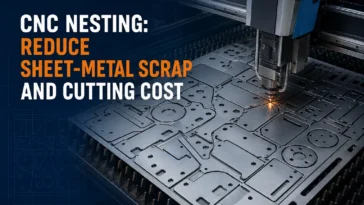
High-volume sheet work favors processes with fast piercing, automation and efficient nesting. Laser often excels here. Plasma is productive for larger structural profiles. Waterjet can stack suitable sheets but may have slower individual toolpaths.
Machine availability can matter more than theoretical speed on a small order. A local plasma supplier with open capacity may deliver sooner than a distant laser shop.
How to Request a Useful Quote
Provide:
- clean DXF files at 1:1 scale;
- PDF drawing with material, thickness and tolerances;
- quantity per part;
- finish and edge requirements;
- grain or brushed-finish direction;
- critical features clearly identified; and
- permission—or prohibition—for common-line cutting and part rotation.
Ask the supplier which process and quality level they recommend. An experienced cutter may identify a feature that drives cost without adding function.
Selection Checklist
- Does the process cut the material safely?
- Is thickness within proven machine capability?
- Are tolerances functional rather than excessive?
- Is heat input acceptable?
- Can required holes and slots be produced reliably?
- What cleanup is required before bending, welding or coating?
- How does quantity affect cost?
- Is grain or finish direction controlled?
- What inspection will confirm the parts?
Conclusion
Laser cutting is excellent for detailed, precise sheet work. Plasma cutting offers strong speed and economy on conductive medium and thick metal. Waterjet cutting provides unmatched material versatility and no heat-affected zone.
Choose by the complete workflow: material, thickness, geometry, tolerance, edge requirement, secondary operations, quantity and local capacity. The best cut is the one that reaches final assembly with the least total cost and risk.
 No products in the cart.