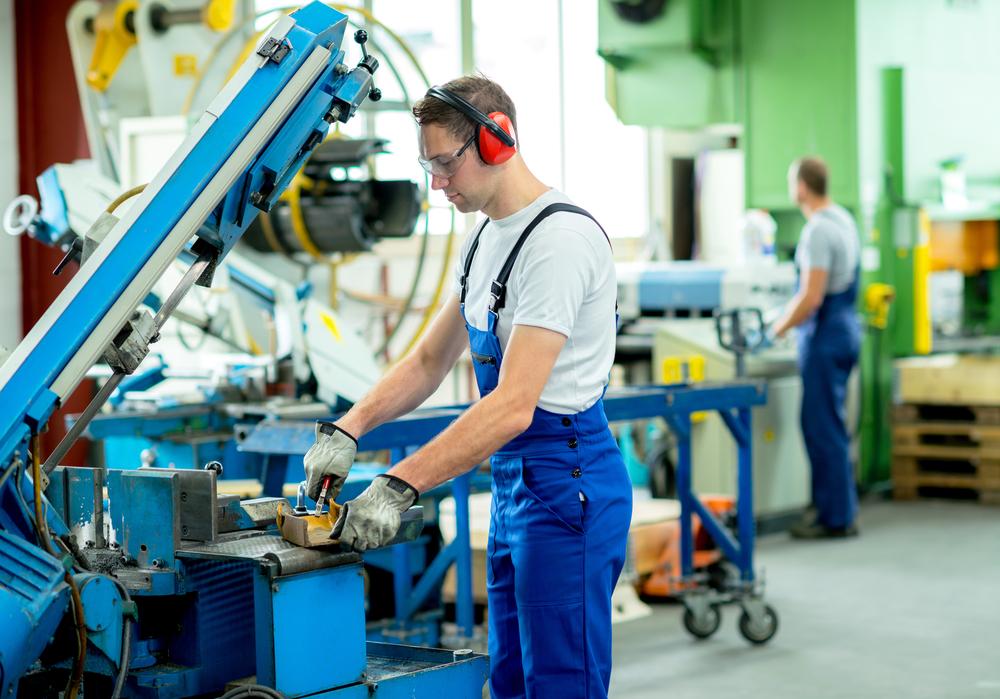
A workshop is a place where creativity, engineering, and production come together. Whether it is a metal fabrication shop, woodworking workshop, automotive garage, or manufacturing facility, workshops often involve powerful tools, heavy machinery, sharp materials, electricity, heat, and moving components.
While machines increase productivity and precision, they can also create serious hazards if they are not operated correctly. A strong workshop safety culture protects workers, reduces downtime, prevents equipment damage, and improves overall efficiency.
Workshop safety is not only about wearing protective equipment—it is about creating a system where people, machines, and processes work together safely.
1. Understanding Workshop Hazards
Every workshop has unique risks, but most hazards fall into several common categories:
Mechanical Hazards
Mechanical hazards are caused by moving machine parts such as:
- Rotating blades
- Cutting tools
- Gears and belts
- Presses and bending machines
- Drilling and milling equipment
- Automated machinery
Moving parts can cause crushing injuries, cuts, amputations, or entanglement if proper safety measures are not followed.
Safety Measures:
✔ Install machine guards
✔ Keep hands away from moving components
✔ Never remove safety covers while operating equipment
✔ Use proper tools instead of hands for positioning materials
Electrical Hazards
Many workshops use electrical equipment that can create risks such as:
- Electric shocks
- Short circuits
- Fires
- Equipment failure
Safety Measures:
- Inspect cables regularly
- Keep electrical panels accessible
- Avoid operating electrical tools with wet hands
- Use proper grounding systems
- Repair damaged equipment immediately
Fire and Heat Hazards
Workshops involving welding, grinding, cutting, or heating operations must manage fire risks carefully.
Common sources include:
- Sparks from grinding
- Welding arcs
- Hot metal pieces
- Flammable liquids
- Gas cylinders
Safety Measures:
- Keep flammable materials away from hot work areas
- Store gases correctly
- Maintain fire extinguishers
- Use welding screens
- Keep emergency exits clear
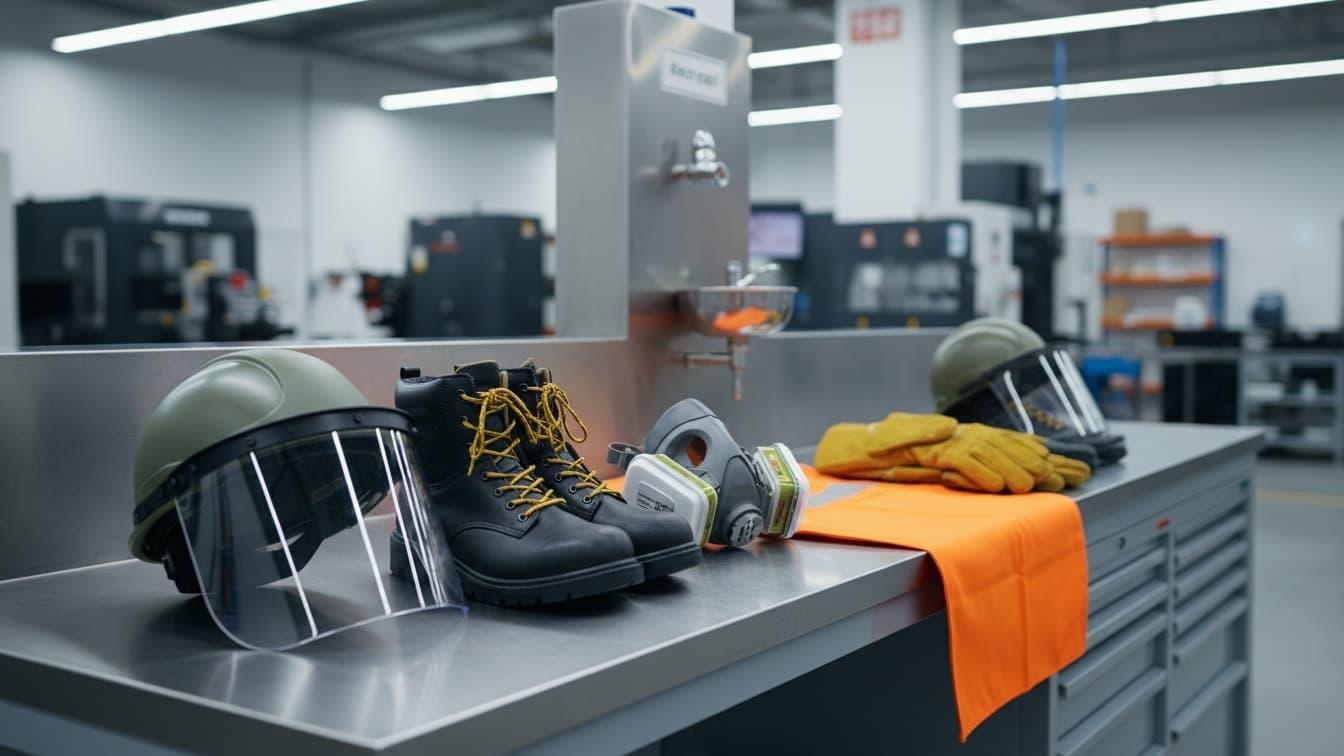
2. Personal Protective Equipment (PPE)
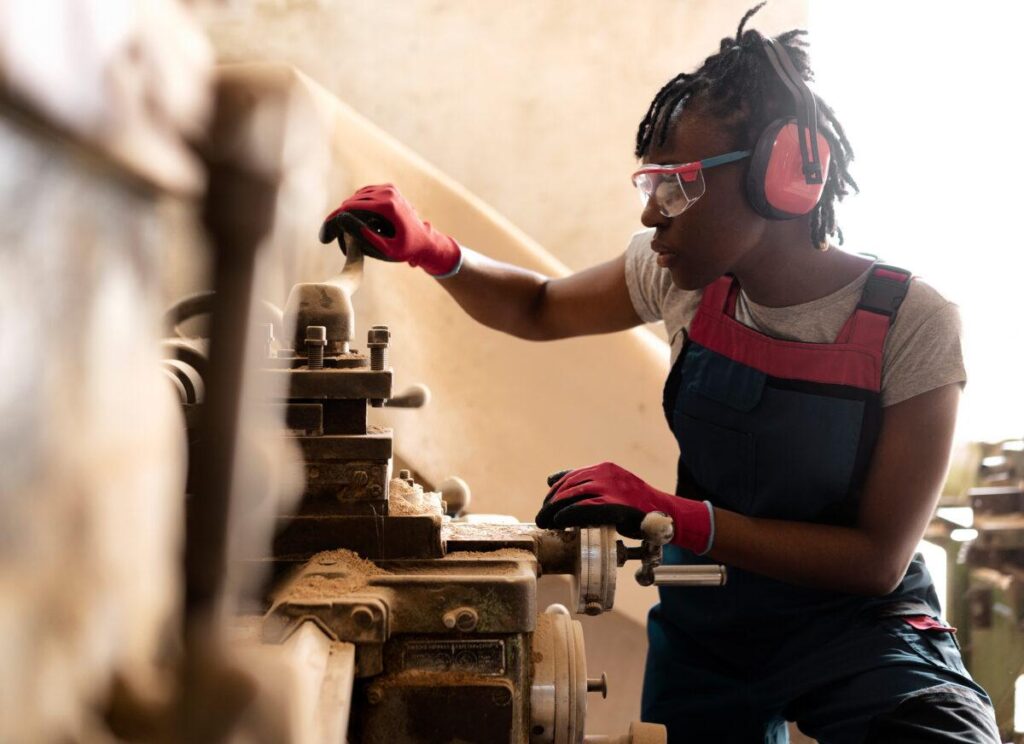
Personal Protective Equipment is the first line of defense against workplace injuries.
Common workshop PPE includes:
Safety Glasses
Protect against:
- Flying metal chips
- Dust particles
- Sparks
- Chemical splashes
Safety Gloves
Protect hands from:
- Sharp edges
- Heat
- Abrasion
- Chemicals
However, gloves should be selected carefully. Loose gloves can be dangerous around rotating machines.
Safety Shoes
Industrial safety footwear protects against:
- Falling objects
- Sharp materials
- Heavy equipment movement
Steel-toe or composite-toe boots are recommended in most industrial environments.
Hearing Protection
Machines such as:
- Press brakes
- Cutting machines
- Compressors
- Grinders
can produce damaging noise levels.
Use:
- Ear plugs
- Ear defenders
when noise exposure is high.
Respiratory Protection
Dust, fumes, and gases from:
- Welding
- Grinding
- Painting
- Cutting composites
require proper ventilation and respiratory protection.
3. Machine Safety: Protecting Operators and Equipment
Machines are designed to improve production, but they must be operated responsibly.
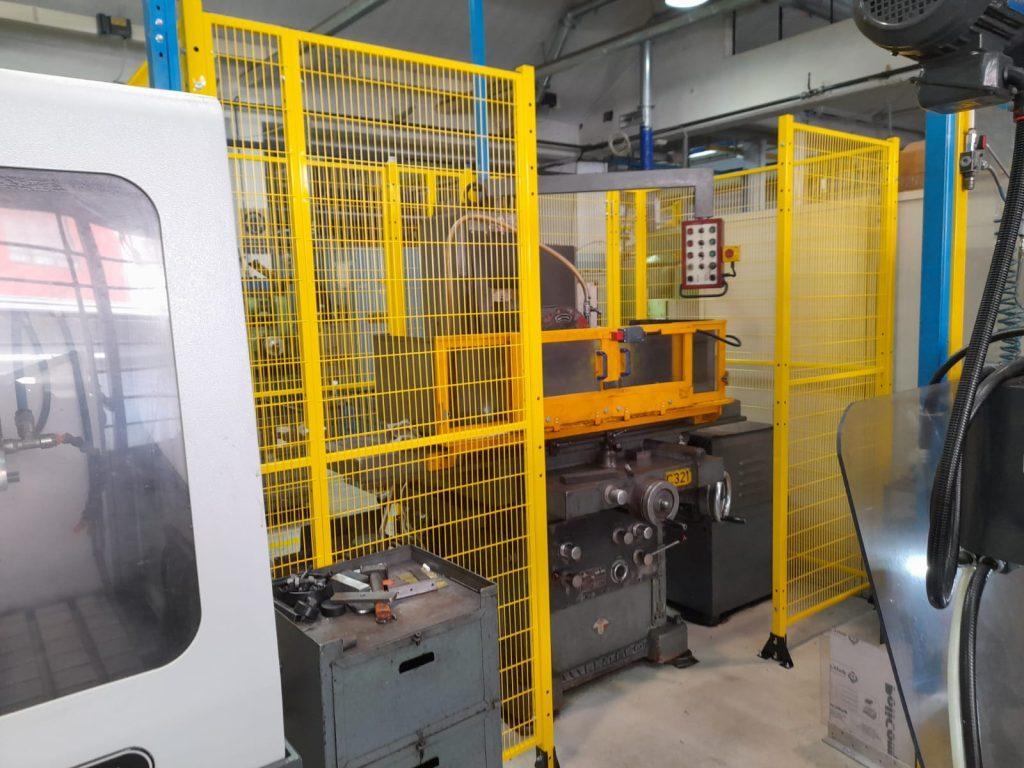
Machine Guards
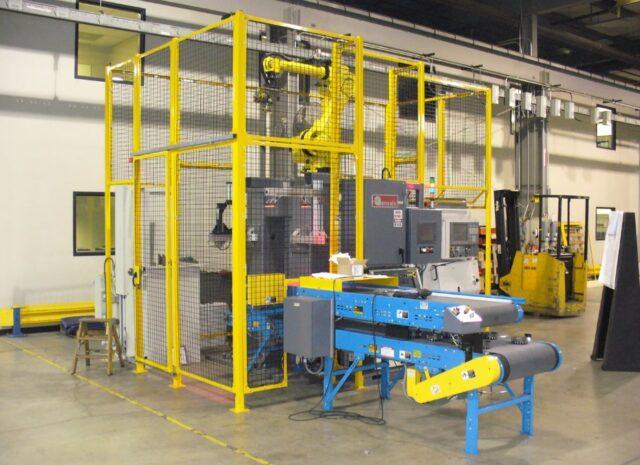
Machine guards prevent workers from contacting dangerous moving parts.
Examples:
- Blade guards
- Belt covers
- Safety shields
- Protective barriers
A machine should never be operated without required guards installed.
4. Lockout/Tagout (LOTO) Procedures
Lockout/Tagout is one of the most important machine safety procedures.
Before maintenance or repair:
- Shut down the machine
- Disconnect all energy sources
- Lock the power supply
- Attach warning tags
- Verify that the machine cannot start
Energy sources may include:
- Electricity
- Hydraulic pressure
- Pneumatic pressure
- Stored mechanical energy
- Heat energy
LOTO prevents unexpected machine startup during servicing.
5. Safe Machine Operation Practices
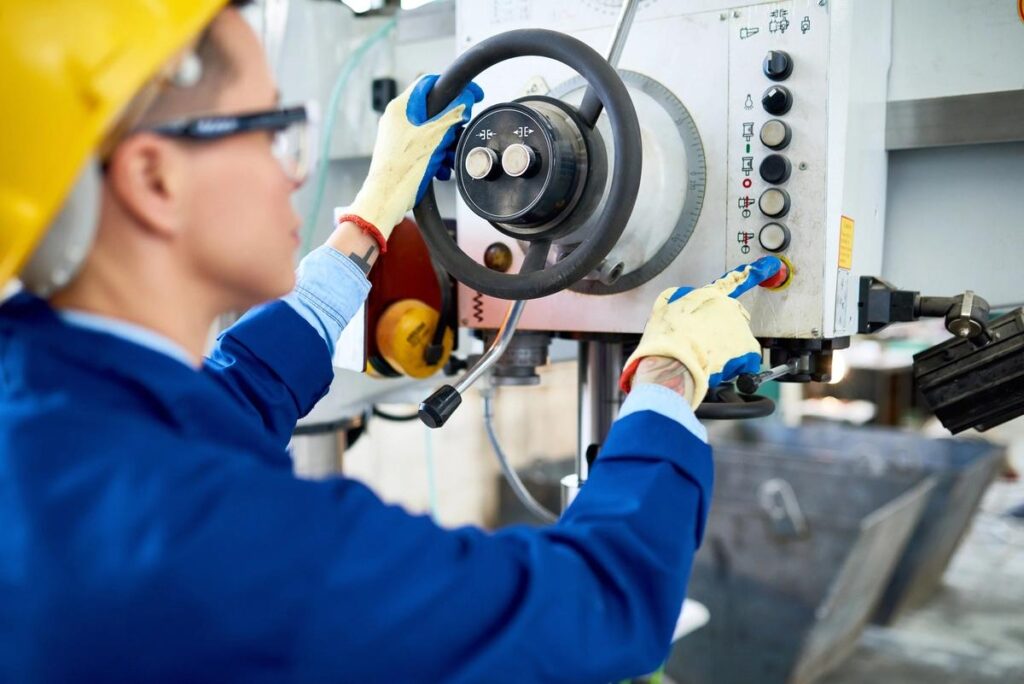
Operators should follow these basic rules:
Before Starting a Machine:
✔ Inspect the machine
✔ Check guards and safety devices
✔ Remove unnecessary tools from the working area
✔ Confirm correct settings
✔ Wear required PPE
During Operation:
✔ Stay focused
✔ Do not rush production
✔ Keep hands away from cutting areas
✔ Use clamps or fixtures when possible
✔ Never leave running machines unattended
After Operation:
✔ Turn off equipment properly
✔ Clean the working area
✔ Report any damage or malfunction
6. Workshop Housekeeping: The Foundation of Safety
A clean workshop is a safer workshop.
Poor housekeeping can cause:
- Slips and falls
- Fire hazards
- Blocked emergency exits
- Damaged equipment
Good housekeeping practices include:
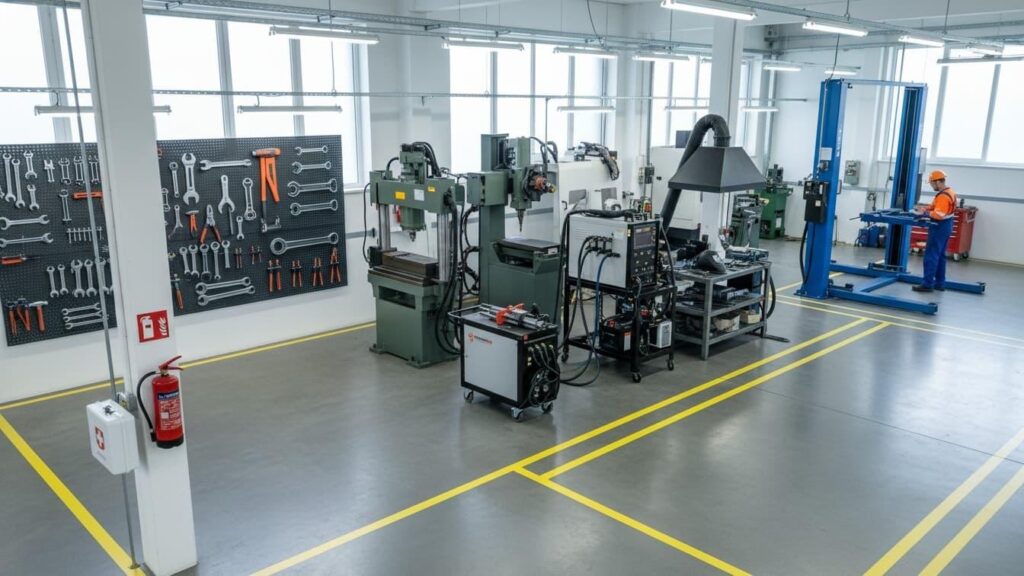
- Store tools properly
- Remove scrap materials regularly
- Keep floors clean
- Organize cables and hoses
- Maintain clear walkways
A well-organized workspace improves both safety and productivity.
7. Training and Safety Awareness
Machines should only be operated by trained personnel.
Training should include:
- Machine operation procedures
- Emergency shutdown procedures
- PPE requirements
- Hazard identification
- Maintenance safety
A worker who understands the risks is more likely to make safe decisions.
8. Emergency Preparedness
Every workshop should have an emergency plan.
Important safety equipment includes:
- Fire extinguishers
- First aid kits
- Emergency stop buttons
- Safety signs
- Emergency lighting
- Clearly marked exits
Workers should know:
- Where emergency equipment is located
- How to stop machines quickly
- Who to contact during emergencies
9. Modern Machine Safety Improvements
Technology has improved workshop safety through:
Emergency Stop Systems
Large machines should have easily accessible emergency stop buttons.
Safety Sensors
Sensors can detect:
- Open guards
- Human presence
- Unsafe conditions
Automated Safety Controls
Modern CNC machines and robotic systems often include:
- Interlocks
- Safety monitoring systems
- Automatic shutdown features
10. Building a Strong Safety Culture
The safest workshops are those where everyone takes responsibility.
A strong safety culture means:
✔ Workers report hazards immediately
✔ Supervisors encourage safe practices
✔ Safety rules apply to everyone
✔ Continuous improvement is encouraged
Safety should never be considered a delay to production—it is an investment in people and performance.
Conclusion
Workshop and machine safety are essential for protecting workers, improving productivity, and maintaining reliable operations. A safe workshop combines proper training, personal protective equipment, machine guarding, good housekeeping, and responsible operating procedures.
Machines are powerful tools, but they require respect and attention. By following safety principles every day, workshops can achieve higher efficiency while creating a safer environment for everyone.
Remember: Production is important, but safe production is the ultimate goal.
 No products in the cart.